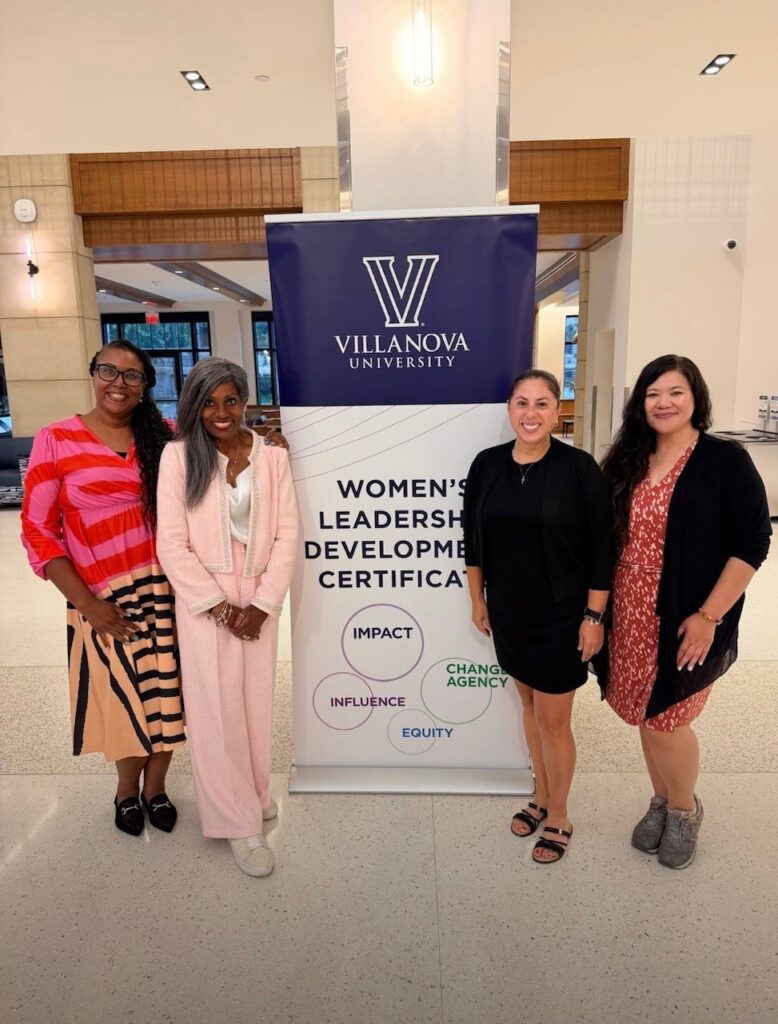

In 2021 the McNulty Institute for Women’s Leadership, in collaboration with the College of Professional Studies, launched the Women’s Leadership Development Certificate. The program uses a collaborative and holistic approach for women at any stage of leadership to build new skills, gain an awareness of systemic gender inequities, expand their networks, and explore ways to influence change. Since its first cohort, more than 50 women have earned a certificate by completing the in-person residencies, presenting a Personalized Leadership Plan, and engaging in peer coaching groups.
This summer, the McNulty Institute received funding from The Boeing Company to host a tailored one-week Women’s Leadership Development Certificate program for veterans and military spouses in STEM. The funding from Boeing and collaborative efforts with Villanova’s Office of Veterans and Military Spouses made the program free of cost to participants.
Maryalice Morro, a two-time Villanova graduate and member of the McNulty Institute Advisory Council, is the program coordinator for both certificate programs. A proud veteran and nurse, this program was a perfect match for her expertise. Maryalice believes that leadership must be different in the military. Relational hierarchies don’t give room for bottom-up critique, and ranks frequently prevent military personnel from hanging out with or socializing with the higher-ups.
But Maryalice doesn’t think that picture matches the leadership we see in civilian life. Women’s leadership, she says, is empathetic, compassionate, and collaborative. To be a “good leader,” you must engage with the people you’re leading; a pill a bit confusing for veterans and military-affiliated people to swallow. She says: “There’s a language that goes with being in the military, and some people have a hard time transitioning from that…They don’t need a platoon leader, but they need someone who can lead a department or a program. Those skills are very transferable.”
Angela Miranda, a US Air Force Veteran and certificate holder from this summer, agreed: “Leadership is different for veterans because we’re not just responsible for ourselves, we’re responsible for the world.”
Angela discovered the WLDC program through her membership in the Disabled American Veterans Association. She and three other women had their airfare covered by the organization, making the program entirely free of cost.
Angela went into the program with two goals: “To update my resume and get a job. I’ve done both.” She is eager to take advantage of the parting networking resources the certificate program gave to her, continue to follow up with her peer coaching group, and is practicing her leadership every day.
Desiree Bearden, a U.S. Army veteran and military spouse, found the program through a LinkedIn page for female veterans. While she highlighted the specific resources and education the program provided, she says that the McNulty Institute crucially provided a space for community for female veterans. For Desiree, female veterans have specific needs that most male-dominated veterans foundation organizations fail to address.
Participant Monifa Caines, a veteran of the United States Airforce, found the lessons on working through conflict to be the most impactful in her time in the program. She says: “Now I need to analyze the person I’m having a conflict with in a way that they can just hear me.” This seminar was the most meaningful to the students as they navigate civilian life and the workforce. Blunt, strict, and immediately-to-the-point conversations often meet deaf or defensive ears. Desiree says she’s learned to speak to people the way they expect to and want to be spoken to.
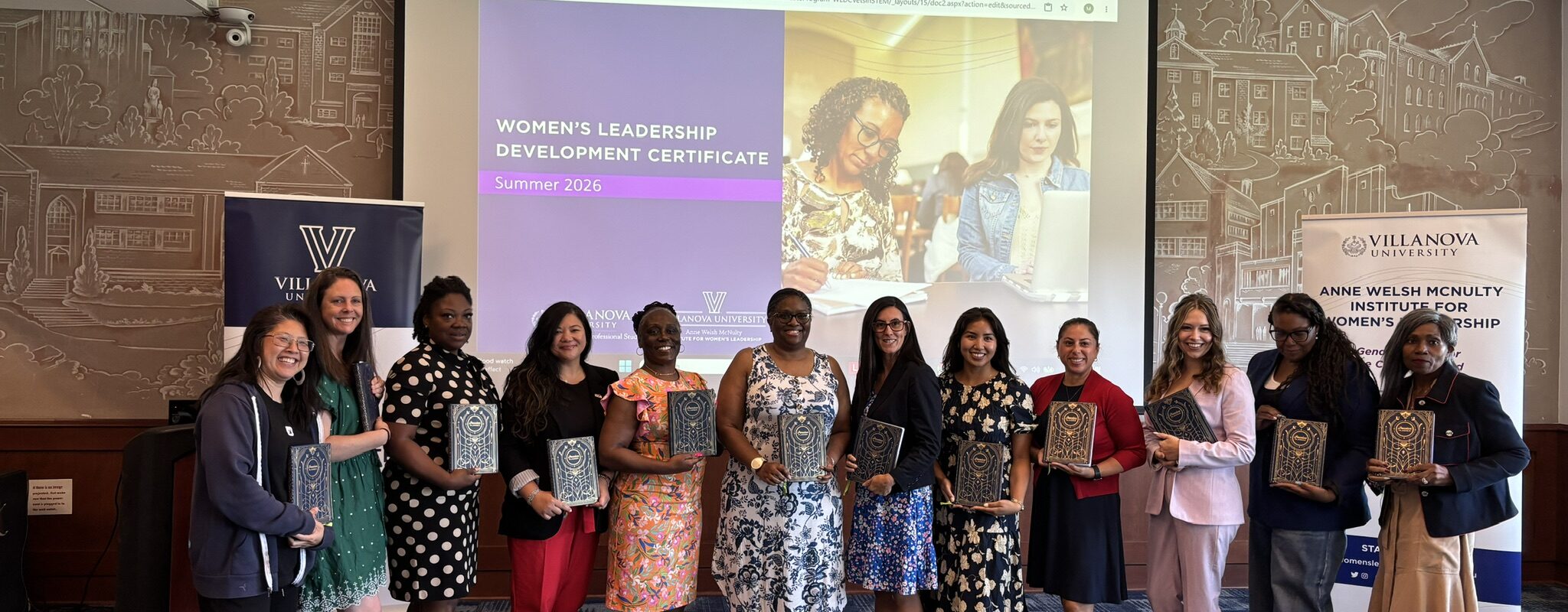
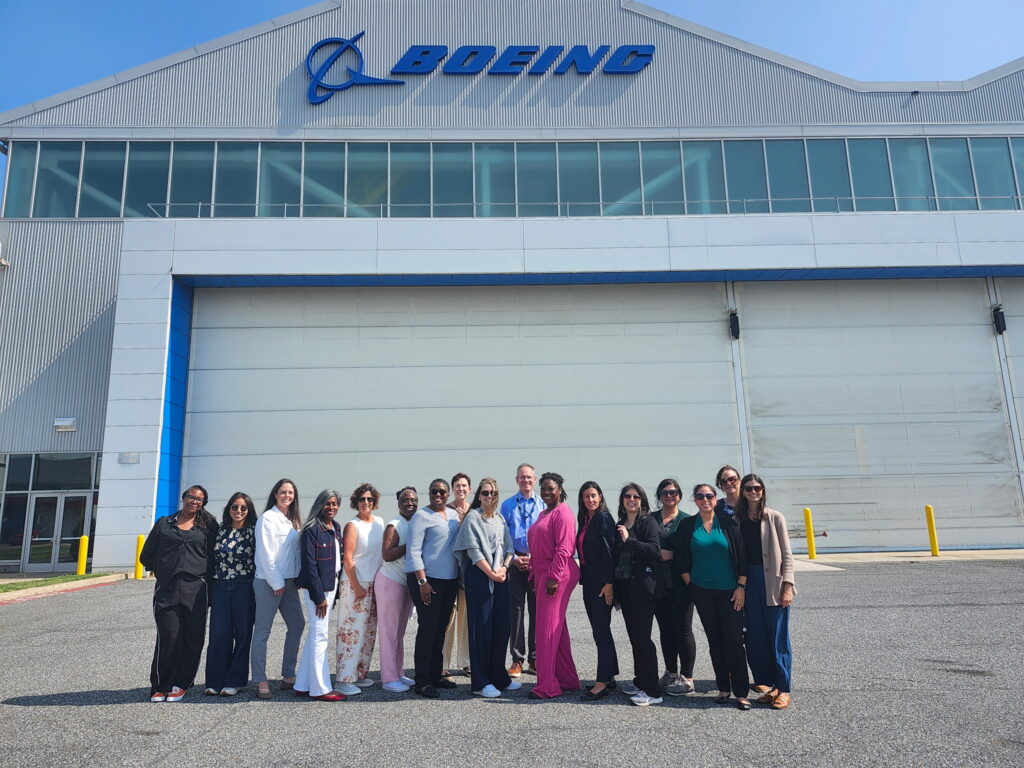
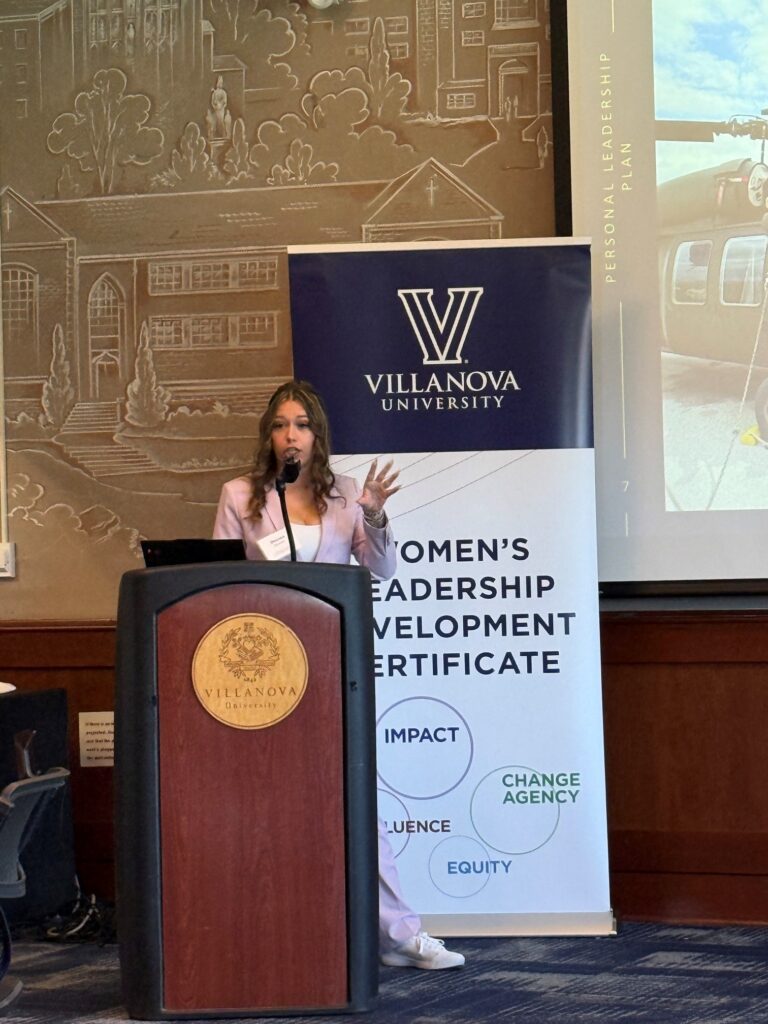
Twelve women, from across the country, earned their certificate this summer. In addition to the daily leadership skill development sessions, the women also engaged in a Leadership in Practice panel hearing from experienced women and veteran leaders, participated in a networking and resource fair, and traveled as a group to Boeing’s Philadelphia campus where they connected with industry leaders and toured the assembly lines of Boeing’s Vertical Lift. At the completion of the week the women presented the drafts of their personalized leadership plan which they continue to hone with the support of their peer coaching groups over the six months after the program. These women ranged in age from early twenties to post-retirement, each, according to Maryalice, contributing thoughtfully to the program. Veterans, Maryalice says, bond naturally, so all the women immediately seemed to click very quickly.
The participants spoke so highly of the community the WLDC cultivated for participants: “We would sit there talking to each other like, ‘Hey, did you know there’s this benefit?’ We’re just trying to feed each other and build each other up because we understand that sometimes other people aren’t going to be able to relate to us. That was really cool.”
Many participants still keep in touch, with several planning a trip to Nevada in the next few weeks. Together, they hope to continue to grow from one another, as well as advocate for female veterans.